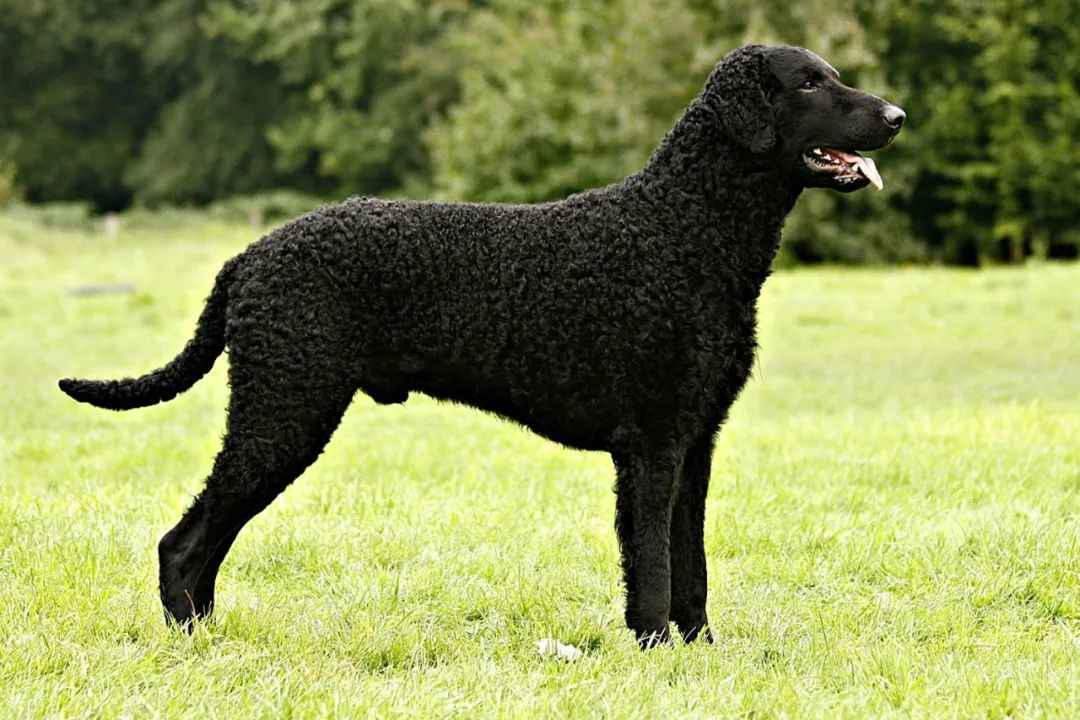
Recognized by the American Kennel Club (AKC) in 1924, the Curly-Coated Retriever’s popularity peaked in the late 19th century but waned with the rise of the Labrador Retriever. Despite near extinction during both World Wars, dedicated breeders revived its lineage, particularly in the U.S. during the 1960s through imports from England, Australia, and New Zealand 14. Today, it remains a rare yet cherished breed, ranking among the least registered AKC breeds but celebrated for its versatility and loyalty 34.
Standing 23–27 inches tall and weighing 60–95 pounds, the Curly-Coated Retriever boasts a balanced, muscular frame with a deep chest and powerful hindquarters. Its dense, crisp curls cover the body, while the muzzle, forehead, and legs sport short, smooth hair. Coat colors are solid black or liver, with minimal white markings allowed 28. Known for its keen intelligence and independent spirit, this breed excels in hunting, obedience, and water sports, though it requires rigorous daily exercise to channel its high energy 57.
Health-wise, Curly-Coated Retrievers have a lifespan of 10–12 years but face genetic risks such as hip dysplasia, progressive retinal atrophy (PRA), and exercise-induced collapse (EIC). Responsible breeders prioritize health screenings to mitigate these issues 57. Despite its working heritage, the breed adapts well to family life, displaying affection and patience with children—though supervision is advised due to its exuberant nature 79.
Today, the Curly-Coated Retriever thrives in roles beyond hunting, including therapy work, search-and-rescue, and conformation shows. Its resilience and charm continue to win hearts, embodying the perfect blend of historical legacy and modern adaptability. As one of the earliest retrievers, it remains a testament to the enduring bond between humans and their canine companions.